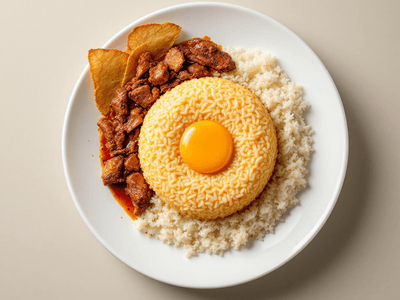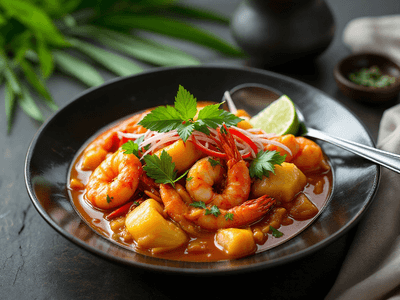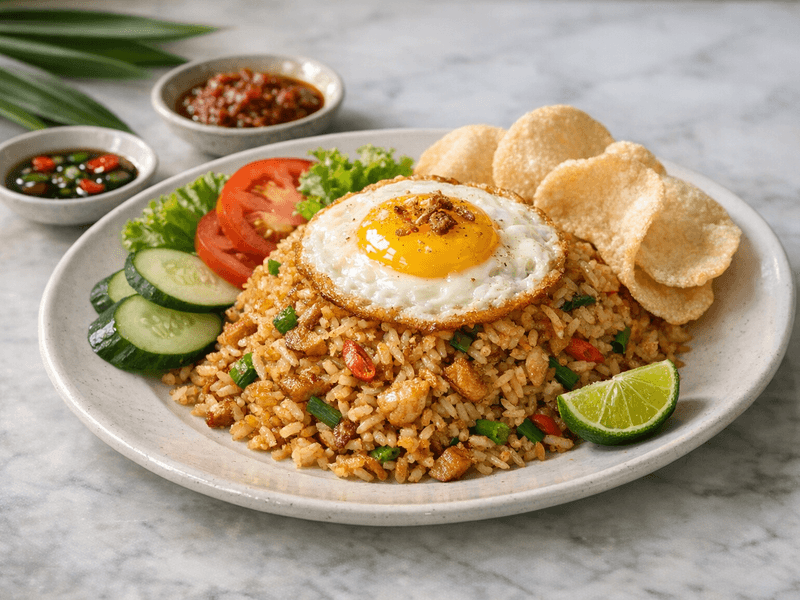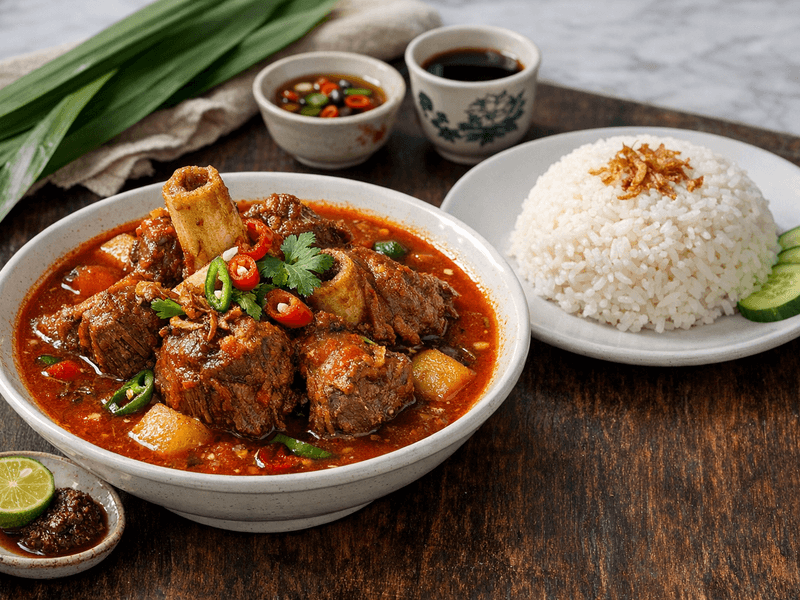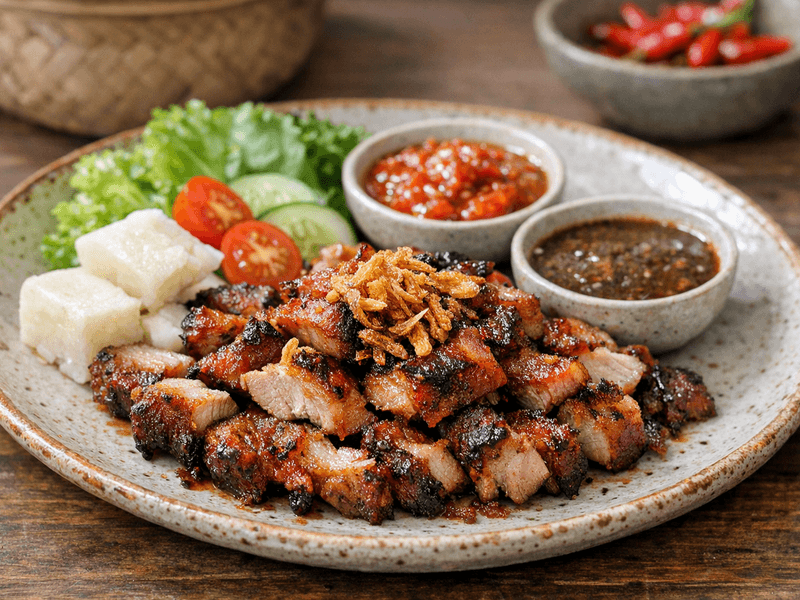
Babi Panggang Karo
Makan Tengah Hari • Malaysia
How to Make Babi Panggang Karo (Traditional & Healthy Vegetarian Version)
Babi Panggang Karo is a beloved Malaysian dish with roots in the Karo community, reflecting the multicultural richness of Malaysia’s cuisine. Traditionally, this recipe features roasted pork, but our health-conscious vegetarian adaptation brings together the flavours of local herbs and spices while keeping the dish nutritious and lighter. The name itself speaks to the vibrant food traditions found in Malaysia, where communities often adapt their favourite recipes to suit dietary preferences and local ingredients. The vegetarian Babi Panggang Karo offers a smoky, spicy, and savoury taste profile using locally available produce like tempeh, lemongrass (serai), and pandan leaves. By incorporating santan (coconut milk) and a medley of Malaysian spices, the dish maintains its authentic flavour while becoming suitable for those seeking meat-free options. This recipe is perfect for lunch, providing a filling yet healthy meal that resonates with the Malaysian love for bold flavours and hearty textures. Whether enjoyed during a family gathering or as a midday treat, the vegetarian twist ensures everyone can appreciate the essence of Babi Panggang Karo.
Bahan-bahan(untuk 1 plate of vegetarian Babi Panggang Karo served with salad)
- 250g Tempeh (Fermented soybean cake)
- 1/2 cup Santan (Coconut milk)
- 1 stalk Serai (Lemongrass, finely chopped)
- 2 leaves Daun pandan (Pandan leaves, tied in knots)
- 3 cloves Bawang putih (Garlic, minced)
- 2 bulbs Bawang merah (Shallots, sliced)
- 2 Cili merah (Red chilies, chopped)
- 2 tbsp Kicap manis (Sweet soy sauce)
- 1 tbsp Minyak masak (Cooking oil)
- 1/2 tsp Garam (Salt)
- 1/2 tsp Lada hitam (Black pepper)
Arahan
- 1
Slice tempeh into thin strips and marinate with kicap manis, garam, and lada hitam for 5 minutes.
5 minutes
Marinating enhances flavour and texture.
- 2
Heat minyak masak in a non-stick pan. Sauté bawang putih, bawang merah, serai, and cili merah until fragrant.
4 minutes
Ensure garlic and shallots are golden for best aroma.
- 3
Add tempeh to the pan and cook until both sides are browned and slightly crispy.
5 minutes
Do not overcrowd the pan for even browning.
- 4
Pour in santan and add daun pandan. Simmer gently until the sauce thickens and tempeh absorbs the flavours.
5 minutes
Stir often to prevent coconut milk from curdling.
Kenapa hidangan ini sihat
Switching from pork to tempeh reduces cholesterol and saturated fat, making this dish ideal for weight management and vegetarian diets. The use of santan and local vegetables adds essential fats and micronutrients without excessive calories. The recipe is high in protein, fiber, and antioxidants, supporting digestive health and muscle recovery, while keeping calorie count moderate for lunch.
Tempeh is a nutrient-dense source of plant protein, high in fiber, and rich in vitamins such as B2, B6, and minerals like iron and calcium. Santan provides healthy fats and antioxidants, while the use of local herbs (serai, pandan) adds phytonutrients. Shallots and garlic boost immunity and improve digestion. This vegetarian dish is low in saturated fat compared to its traditional meat counterpart, making it suitable for those seeking heart-healthy meals.
Petua
- 💡Tip 1: Use freshly made tempeh for best texture and taste.
- 💡Tip 2: Tie pandan leaves into knots to release maximum aroma.
- 💡Tip 3: Adjust chili for desired heat level; remove seeds for milder taste.
Penyimpanan & hidangan
Store leftovers in an airtight container in the fridge for up to 2 days. Reheat in a pan or microwave before serving. Avoid freezing as coconut milk may separate.
Paling sesuai dihidang: Lunch
Fakta Nutrisi
| Nutrien | Per 100g |
|---|---|
| Tenaga | 400.0 kcal |
| Protein | 13.0 g |
| Karbohidrat | 2.0 g |
| Jumlah Lemak | 15.0 g |
| Serat | 0.1 g |
| Gula | 0.5 g |
| Zat Besi | 1.2 mg |
| Kalsium | 15.0 mg |