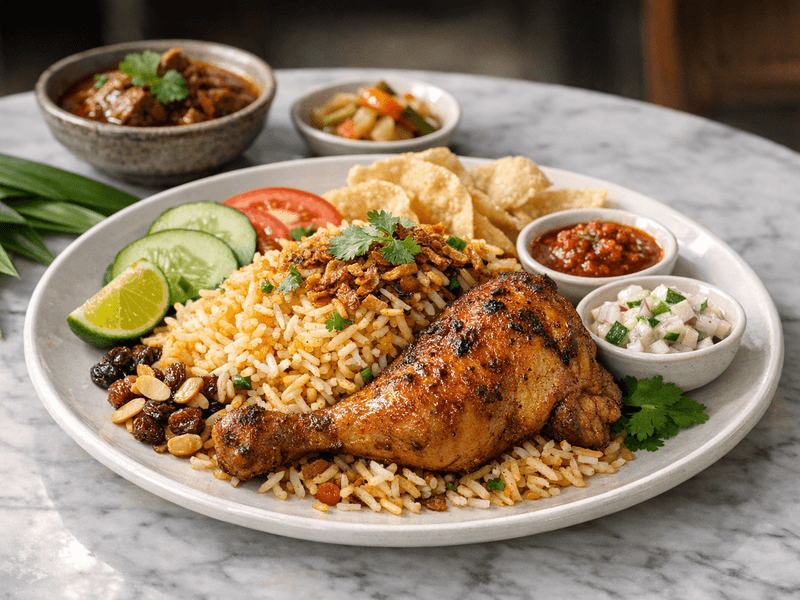
Nasi Arab
Makan Tengah Hari • Malaysia
How to Make Nasi Arab (Traditional & Healthy Version)
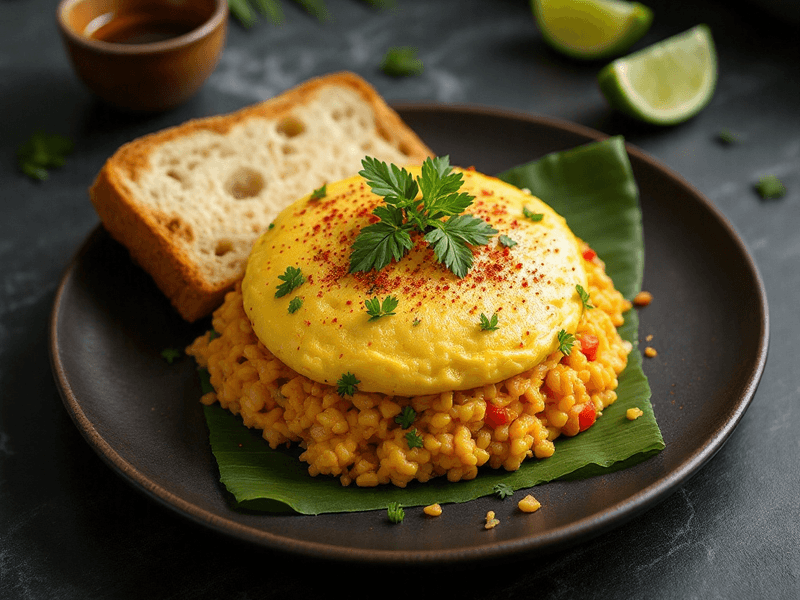
Nasi Arab, inspired by the diverse influences in Malaysian cuisine, is a fragrant rice dish that beautifully blends local spices, herbs like pandan and daun ketumbar (coriander leaves), and wholesome vegetables to create a satisfying vegetarian meal. While the name carries an Arab heritage, Malaysians have made this dish uniquely their own with the inclusion of ingredients such as bunga cengkih (cloves), kayu manis (cinnamon stick), and halba (fenugreek), resulting in an aromatic rice that is loved by all communities. Traditionally served during gatherings and festive occasions, Nasi Arab is a centerpiece that brings people together through its rich flavors and inviting aroma. This health-conscious, vegetarian Nasi Arab recipe is a great choice for those seeking a nutritious yet indulgent meal. The rice is cooked with a blend of spices, fresh tomatoes, raisins, and a hint of minyak sapi (ghee) for authentic taste, but can be easily modified for a lighter version. Using locally sourced basmati rice, flavorful herbs, and vegetables, this dish offers an excellent balance of carbohydrates, fiber, and essential vitamins, making it a perfect lunch option for health-minded individuals. Its versatility and adaptability to various dietary needs have made Nasi Arab a staple in Malaysian multicultural cuisine, celebrated for both its taste and wholesomeness.
Bahan-bahan(untuk 1 generous Malaysian lunch serving)
- 1 cup Beras basmati (basmati rice) (Rinsed and soaked 15 mins)
- 1 tablespoon Minyak sapi (ghee) or olive oil (Use olive oil for less fat)
- 1 medium Bawang besar (onion) (Finely chopped)
- 2 cloves Bawang putih (garlic) (Minced)
- 1 inch Halia (ginger) (Julienned)
- 1 stick Kayu manis (cinnamon stick)
- 3 pieces Bunga cengkih (cloves)
- 2 pods Buah pelaga (cardamom pods)
- 1 leaf Daun pandan (Knotted)
- 1/2 teaspoon Lada hitam (black pepper) (Freshly ground)
- 1 medium Tomato (Diced)
- 2 tablespoons Kismis (raisins) - pilihan
- 1/2 teaspoon Garam (salt) (To taste)
- 1 3/4 cups Air (water)
- 2 tablespoons Daun ketumbar (coriander leaves) (Chopped, for garnish) - pilihan
- 1/2 cup Mixed vegetables (carrot, peas, corn) (Optional for more fiber) - pilihan
Arahan
- 1
Rinse and soak beras basmati for at least 15 minutes. This helps achieve fluffy, separate grains.
15 minutes
Use cold water and drain thoroughly before cooking.
- 2
Heat minyak sapi or olive oil in a heavy-bottomed pot. Sauté bawang besar, bawang putih, and halia until fragrant and soft.
5 minutes
Stir constantly to avoid burning the aromatics.
- 3
Add kayu manis, bunga cengkih, and buah pelaga. Sauté until the spices release their aroma.
2 minutes
Spices are ready when they sizzle and become fragrant.
- 4
Add diced tomato and mixed vegetables (if using). Cook until the tomato softens.
3 minutes
For more color, use a mix of red and yellow peppers.
Kenapa hidangan ini sihat
Nasi Arab is a healthy choice as it combines whole grains, minimal added fats, and a generous serving of vegetables. By using basmati rice and olive oil, this recipe supports healthy blood sugar levels and cardiovascular health. The abundance of herbs and spices not only enhances flavor but also delivers antioxidants, making this meal filling, nutritious, and suitable for weight management and balanced eating.
This vegetarian Nasi Arab is rich in complex carbohydrates from basmati rice, which has a lower glycemic index compared to regular white rice. The addition of fresh vegetables boosts fiber, vitamins A and C, while spices like ginger and garlic provide antioxidants and anti-inflammatory benefits. The use of olive oil instead of traditional ghee reduces saturated fat, making this dish heart-friendly. Raisins add natural sweetness and minerals like potassium, while coriander leaves contribute vitamin K and immune-boosting phytonutrients.
Petua
- 💡Tip 1: Always soak the rice for fluffier and separate grains.
- 💡Tip 2: Use a heavy-bottomed pot or rice cooker to prevent burning.
- 💡Tip 3: Garnish with fresh herbs and a squeeze of lime for extra brightness.
Penyimpanan & hidangan
Store leftover Nasi Arab in an airtight container in the refrigerator for up to 2 days. Reheat gently with a sprinkle of water to regain moisture. Avoid freezing for best texture.
Paling sesuai dihidang: Lunch
Fakta Nutrisi
| Nutrien | Per 100g |
|---|---|
| Tenaga | 250.0 kcal |
| Protein | 5.0 g |
| Karbohidrat | 28.0 g |
| Jumlah Lemak | 5.0 g |
| Serat | 1.0 g |