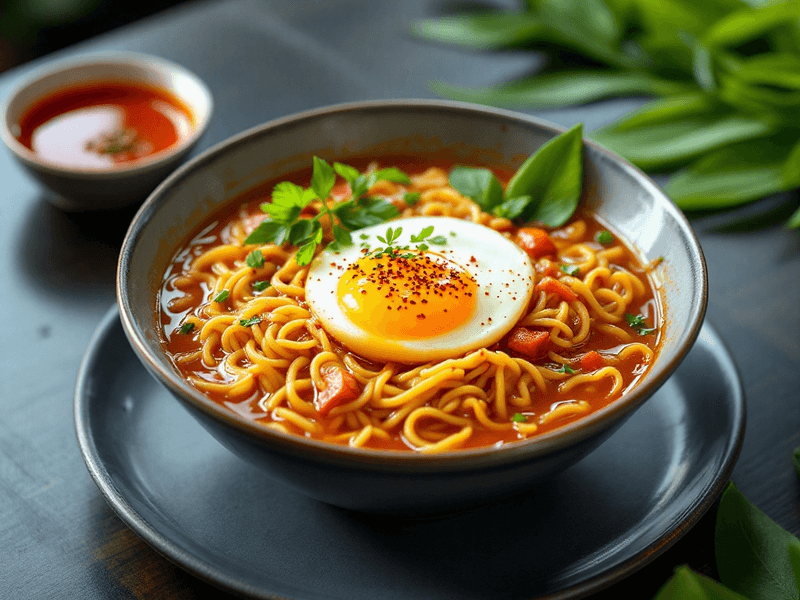
Kuey Teow Sup Telur
Makan Tengah Hari • Malaysia
How to Make Kuewtiaw Soup with Egg (Traditional & Healthy Version)
Kuewtiaw Soup with Egg is a beloved Malaysian dish that brings together silky smooth rice noodles (kuewtiaw), clear aromatic broth, and a perfectly poached egg for a comforting, light meal. Originating from Malaysia's bustling hawker culture, this vegetarian version showcases the multicultural influences found in Malaysian cuisine, blending Chinese-style noodles with Malay-inspired herbs like daun sup (Chinese celery) and bawang goreng (crispy shallots). The soup is mildly seasoned but deeply flavorful, thanks to local ingredients such as lemongrass and white pepper, making it both satisfying and nourishing. Served hot, Kuewtiaw Soup with Egg is a versatile choice for lunch or a light dinner, loved across all ethnic groups in Malaysia. It is especially popular for its gentle flavors and easy digestibility, making it suitable for all ages. The addition of a soft-cooked egg adds richness and protein, while fresh vegetables and herbs keep the dish light and refreshing. Whether enjoyed at a kopitiam or prepared at home, this recipe embodies the Malaysian spirit of sharing wholesome, homemade food with family and friends.
Bahan-bahan(untuk 1 large bowl (approx. 400g per serving))
- 200g Kuewtiaw (flat rice noodles) (fresh or soaked dried)
- 2 Eggs (large, free-range)
- 800ml Vegetable stock (low-sodium)
- 1/2 medium Carrot (julienned)
- 2 small heads Bok choy (halved)
- 1 stalk Lemongrass (bruised)
- 2 cloves Garlic (finely chopped)
- 1/2 tsp White pepper (freshly ground)
- 1 tbsp Light soy sauce (low sodium)
- 1 stalk Spring onion (sliced, for garnish)
- 2 tbsp Daun sup (Chinese celery) (chopped, for garnish)
- 1 tbsp Bawang goreng (crispy shallots) (optional, for topping) - pilihan
Arahan
- 1
Prepare the kuewtiaw by soaking in warm water if using dried noodles, or rinsing fresh noodles under cold water to separate.
5 minutes
Avoid over-soaking to maintain the noodles' chewy texture.
- 2
In a large pot, bring vegetable stock to a gentle boil with lemongrass. Simmer for 5-7 minutes to infuse the broth.
7 minutes
Slightly bruise the lemongrass to release its aroma.
- 3
Add garlic, carrot, and bok choy to the broth. Cook until vegetables are tender but still vibrant, about 4 minutes.
4 minutes
Add bok choy stems first, leaves later for best texture.
- 4
Season the broth with white pepper and light soy sauce. Taste and adjust seasoning as needed.
1 minute
Use low-sodium soy sauce to control salt intake.
Kenapa hidangan ini sihat
Kuewtiaw Soup with Egg is a healthy lunch option because it’s made with wholesome plant-based ingredients, low sodium seasoning, and healthy cooking methods like poaching and simmering. It is free from deep frying and excessive oils, making it suitable for those monitoring their calorie and fat intake. The balance of protein, carbs, and fiber makes it satisfying and ideal for maintaining energy without heaviness, supporting a balanced Malaysian diet.
This Kuewtiaw Soup with Egg is packed with nutrients and light on calories. The dish features a clear, low-fat vegetable broth, lean protein from eggs, and plenty of fiber from fresh vegetables like carrot and bok choy. Rice noodles provide sustained energy through complex carbohydrates. Eggs contribute high-quality protein, vitamin B12, and choline, while the broth and vegetables supply antioxidants and minerals including vitamin A and C. The use of lemongrass and daun sup adds both flavor and digestive benefits.
Petua
- 💡Tip 1: Use fresh kuewtiaw for the most authentic texture and flavor.
- 💡Tip 2: Simmer the lemongrass in the broth for a full, aromatic base.
- 💡Tip 3: Crack eggs into a bowl before adding to the soup for easier poaching and less risk of shell fragments.
Penyimpanan & hidangan
Store leftover soup and noodles separately in airtight containers in the refrigerator for up to 2 days. Reheat the broth gently and assemble noodles and garnishes just before serving for best texture.
Paling sesuai dihidang: Breakfast or Lunch
Fakta Nutrisi
| Nutrien | Per 100g |
|---|---|
| Tenaga | 320.0 kcal |