Daifuku Kacang Hitam
Makan Tengah Hari • Malaysia
How to Make Black Bean Daifuku (Traditional & Healthy Version)
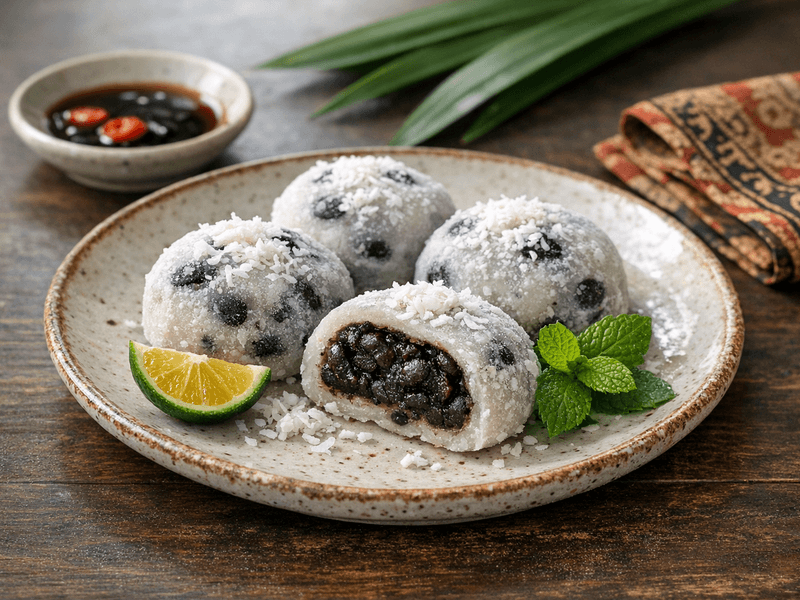
Black Bean Daifuku is a delightful vegetarian treat, inspired by Japanese wagashi but reimagined with a Malaysian twist. In Malaysia’s multicultural culinary landscape, daifuku has become a favorite among locals, especially with the inclusion of black beans, which are commonly used in our desserts and savoury dishes. The soft, chewy mochi exterior, made from glutinous rice flour (tepung pulut), encases a subtly sweet black bean paste, sometimes accented with pandan essence for a uniquely Malaysian aroma. This healthier version of Black Bean Daifuku uses less sugar and incorporates santan (coconut milk) for a creamy, tropical flavor, reflecting the diversity of Malaysian cuisine. It’s perfect for lunch or as a midday snack, satisfying your cravings without compromising on nutrition. Whether you’re celebrating festive occasions or simply enjoying Malaysian street food culture, this daifuku is a beautiful fusion of tradition and innovation, making it a must-try for anyone passionate about Malaysian vegetarian recipes.
Bahan-bahan(untuk 2 medium daifuku per serving)
- 1 cup Tepung pulut (glutinous rice flour)
- 1/2 cup Black beans (soaked overnight)
- 3/4 cup Air (water)
- 1/4 cup Santan (coconut milk) (fresh or boxed)
- 2 tbsp Gula halus (fine sugar)
- 1 leaf Pandan leaf (optional, for aroma) - pilihan
- 1/4 cup Cornstarch (for dusting)
- 1/8 tsp Sea salt
- 1/2 tsp Vanilla essence - pilihan
- 1 stalk Lemongrass (optional, for subtle flavor) - pilihan
Arahan
- 1
Soak the black beans overnight, then rinse and boil with pandan leaf and lemongrass until tender. Drain and remove aromatics.
10 minutes
Add pandan and lemongrass for authentic Malaysian aroma.
- 2
Mash the cooked black beans with sugar, salt, and a splash of santan until smooth. Set aside to cool.
5 minutes
Use a food processor for a finer paste.
- 3
Mix tepung pulut, water, santan, and vanilla essence in a bowl until a thick, smooth batter forms.
5 minutes
Avoid overmixing to keep mochi tender.
- 4
Steam the mochi batter in a heatproof dish for 15 minutes until translucent and cooked through.
15 minutes
Cover with cling film to prevent drying.
Kenapa hidangan ini sihat
This recipe minimizes refined sugar and incorporates nutrient-dense local ingredients like black beans and santan. The protein and fiber content help regulate blood sugar and promote satiety, making it a smart lunch choice. Using traditional Malaysian flavors, this daifuku is a healthier alternative to conventional desserts, supporting weight management and heart health.
Black Bean Daifuku is rich in plant-based protein from black beans, offering dietary fiber, iron, and folate. The use of tepung pulut (glutinous rice flour) provides complex carbohydrates for sustained energy. Santan (coconut milk) adds healthy fats, while pandan and lemongrass contribute antioxidants. This vegetarian dessert is low in cholesterol and free of animal products, making it suitable for a balanced Malaysian diet.
Petua
- 💡Tip 1: Use fresh pandan leaf for maximum aroma.
- 💡Tip 2: Mash black beans thoroughly for a silky filling.
- 💡Tip 3: Steam mochi batter with cling film to prevent drying and cracking.
Penyimpanan & hidangan
Store in an airtight container in the fridge for up to 2 days. Allow to come to room temperature before serving for best texture. Avoid freezing to preserve mochi softness.
Paling sesuai dihidang: Breakfast or Lunch
Fakta Nutrisi
| Nutrien | Per 100g |
|---|---|
| Tenaga | 130.0 kcal |
| Protein | 5.1 g |
| Karbohidrat | 44.0 g |
| Jumlah Lemak | 0.7 g |
| Serat | 3.5 g |
| Gula | 16.0 g |
| Zat Besi | 1.8 mg |
| Kalsium | 18.0 mg |
| Natrium | 12.0 mg |
| Kalium | 110.0 mg |
| Kolesterol | 0.0 mg |
| Vitamin A | 0.0 IU |
| Vitamin C | 0.5 mg |
| Magnesium | 22.0 mg |
| Zinc | 0.5 mg |
| Phosphorus | 40.0 mg |
| Vitamin D | 0.0 IU |
| Vitamin B1 (Thiamine) | 0.1 mg |
| Vitamin B2 (Riboflavin) | 0.0 mg |
| Vitamin B3 (Niacin) | 0.3 mg |
| Vitamin B6 | 0.0 mg |
| Vitamin B12 | 0.0 µg |
| Folate | 12.0 µg |